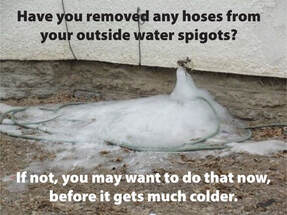
- Posts showing your utility’s culture: A culture post is an image or article showcasing what your utility is all about. Think behind-the-scenes image of your employees doing something, or an article about how your utility does something a certain way.
- Question posts: Get your audience talking and engaging by asking a question. For example, you could ask, “When is the last time you changed your furnace filter?” that would always serve as a reminder to change a furnace filter if someone hasn’t in awhile.
- Photos: Take a picture of something and explain it. Maybe it’s a piece of machinery. You can then explain (in layman’s terms) what it is and how it’s used to provide customers with their utilities.
- Image scrambles: You’ll have your customers scratching their heads in no time when you post image scrambles. Image scrambles can be posts where an image is scrambled up or zoomed in, so your audience must guess what it is.
- Videos: Record a video of something on a smartphone. It could be of a crew working on a project or a simple reminder about something from someone in the office.
- Customer testimonials: Did someone have something nice to say about your utility and/or your employees? Share it. Ask if the person is comfortable sharing his or her name with the testimonial. If not, ask if you could share the testimonial without a name and simply sign it with “a satisfied customer.”
- Quick tips and advice: Everyone can use some utility tips. Even if your audience may already know something, a good reminder always helps.
- Post answers to commonly asked questions: Receiving the same questions over and over from customers? Instead of constantly responding to questions one by one, solve it once and for all by sharing posts with the answers.
- Team member spotlights: Post pictures and short bios on members of your team. Make the posts fun and share interesting, non-utility tidbits, too (if team members are comfortable sharing).
- Utility accomplishments: Share your successes with your customers on social media and celebrate together!
- Posts showing off your utility history: It’s always fun to see how far a utility has come and where it started.
|
So, your utility has a Facebook page, now what? If you struggle to come up with post items for your page, here are some ideas to get you started:
0 Comments
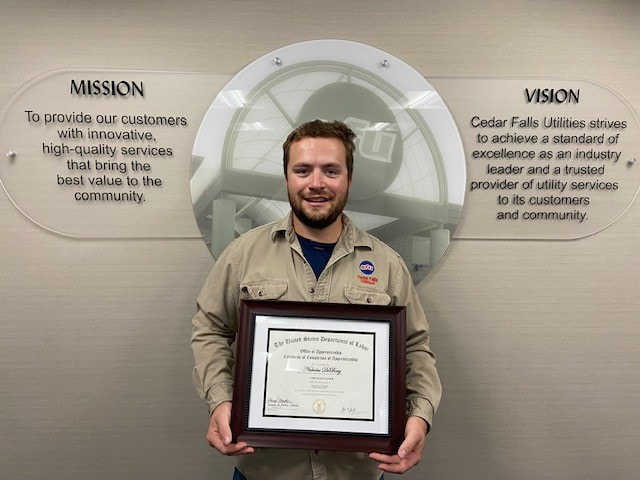
Congratulations to Nick DeBerg of Cedar Falls Utilities on completing the IAMU Apprenticeship Program. Brandon began the program on November 17th, 2017 and graduated September 11th, 2021. Congratulations to Jasen Bender of Muscatine Power & Water on completing the IAMU Apprenticeship Program. Brandon began the program on March 17th, 2017 and graduated September 4th, 2021. Pictured with Jasen (on left) is Ryan Streck, Director, Utility Service Delivery For more information about the Apprentice Program, contact IAMU Director of Electric Services Jared Masker at [email protected].
Fifth Circuit Extends Stay of OSHA's Emergency Temporary Standard on COVID-19 Vaccination11/23/2021 On Nov. 12, 2021, the U.S. Court of Appeals for the Fifth Circuit extended its stay of the emergency temporary standard (ETS) issued by the Occupational Safety and Health Administration (OSHA) pending review of the ETS by the Fifth Circuit.
Challenges to the ETS are pending in numerous circuit courts around the country. The judicial panel on multidistrict litigation must, by statute, randomly select one circuit court to hear the petitions challenging the ETS. Unless the judicial panel on multidistrict litigation randomly selects the Fifth Circuit to hear the litigation related to the ETS, the Fifth Circuit's ruling may be reconsidered by the circuit court ultimately selected to review the ETS. The litigation regarding OSHA's large-employer vaccination ETS does not impact OSHA's vaccination requirements for federal contractors or its ETS covering healthcare workers. It also does not impact the vaccination requirement issued by the Centers for Medicare and Medicaid Services (CMS) for medical staff at facilities that participate in the Medicare and Medicaid programs. Read more here. IAMU Safety Group Program Members,
The below link will take you to our Jester Insurance Services YouTube channel. There you will find individual video recordings of the various topics covered at our recent IAMU safety group workshop. Our speakers did an excellent job providing valuable insight on several very important topics. If you were unable to attend the workshop in person I would strongly encourage you to take time to watch each video over the next few weeks. https://www.youtube.com/watch?v=o63pIyJQtgs&list=PLYrmVZQvUeVldUjOqSYB13ytS4nCwbMvP The IAMU safety group program exists and continues thriving because of you all. Thank you for your continued support of the program! The first of many test results for per- and polyflyouroalkyl (PFAS) chemicals are expected to start coming in soon. Per- and polyfluoroalkyl substances (PFAS) include a large group of man-made chemicals that have been used for decades.
The DNR began sampling for these chemicals in October as part of a comprehensive plan to better understand PFAS levels in Iowa’s drinking water. DNR focused on public drinking water supplies because drinking water is the primary path for people to be exposed to PFAS. DNR identified 102 sites where the facilities are supplied by surface water or shallow groundwater sources, and those close to a potential PFAS source. So far, DNR has collected raw and finished (or treated) drinking water samples at about 15% of the sites. Samples went to a laboratory certified to test for PFAS. As test results come in, DNR will report results to each public water supply. Results will also be posted on the DNR’s PFAS webpage. EPA set a lifetime health advisory level of 70 parts per trillion (ppt) for PFOA and PFOS to protect people from the risks of exposure in drinking water. If PFOA or PFOS is detected, DNR will work with the public water supply to set up a year-long sampling plan, requiring monitoring every three months. If individual or combined test results show PFOA or PFOS levels above the U.S. Environmental Protection Agency’s health advisory of 70 ppt, the water supply is required to notify its customers. And, DNR will work to identify potential sources of contamination. Additionally, the department is working with the Iowa Department of Public Health on this issue. DNR is taking a proactive approach to protect Iowans’ health and the environment. By testing the public drinking water sources, DNR will gain a better understanding of the potential for PFAS levels in Iowa. Results of the testing will guide DNR’s next steps to ensure safe drinking water. The U.S. Environmental Protection Agency (EPA) will host AWIA Office Hours to answer questions that small-sized (serving a population of 3,301 to 49,999 people) community water systems (CWSs) may have on completing and certifying their AWIA Emergency Response Plan (ERP) by the upcoming December 31, 2021 deadline. While Section 2013 of AWIA does not require the use of any standards, methods, or tools, EPA Office Hours will focus on the resource that EPA developed to aid small-sized CWSs in complying with AWIA ERP requirements, the ERP Template and Instructions for Drinking Water Utilities.
Office hours will be held in 45-minute sessions from December 1-30, 2021. Everything discussed during office hours will remain confidential. AWIA Background: AWIA Section 2013 requires community (drinking) water systems serving more than 3,300 people to develop or update Risk and Resilience Assessments (RRAs) and ERPs. AWIA, promulgated on October 23, 2018, specifies the components that the RRAs and ERPs must address and establishes deadlines by which water systems must certify to EPA completion of the RRA and ERP. Please visit EPA’s AWIA website for more information: epa.gov/waterresilience/awia-section-2013 Sign up for an office hours appointment here: calendly.com/awia-office-hours/erp If you have questions, please contact us at [email protected]. The elbow is a complex joint that extends, flexes and rotates. Many people experience pain from work or normal daily activities. Pain can occur on the front, back, and either side of the elbow and can vary anywhere from a tingling to sharp pain. It’s important that your doctor evaluate areas above and below the elbow to find the cause of the pain.
https://www.worksiteright.com/post/causes-of-and-remedies-for-elbow-pain Think of your utility service as a product you’re trying to sell to your audience. Now, put on your marketing cap. How should you go about getting potential customers to buy what you have to offer? Steal a sound selling strategy from the pros: Use photos and videos. Statistics show that people pay more attention to a message if it includes a photo and/or video. Here are just a few compelling numbers to note:
The photos and videos don’t have to be award-winning worthy to be powerfully persuasive. With the popularity of camera-equipped smartphones and social-media sharing sites such as Instagram and Facebook, people have grown accustomed to amateur photos and videos. And actually, testimonial-type photos and videos from participants may be more convincing in selling your message to others because the images and footage come across as more genuine than anything professionals might produce.
Mark your calendars for the 2022 IAMU Electric Superintendent and Foreman’s Meeting. The workshop is scheduled for January 12 – 14, 2022, at Prairie Meadows - The Meadows Events Center in Altoona, Iowa. This workshop is specifically designed to cover topics of interest to electric superintendents and foremen. Also returning is the Product Show & Reception. Come socialize with fellow utility personnel and meet with exhibitors to see their latest products, technology, and services. Hotel Information Prairie Meadows is the designated hotel for accommodations at this upcoming meeting. Please mention the Group Code - “01122022IAMU” and Password – “863000102” when booking. The room rate is $111+tax per night. Book early! Reservation block deadline is December 13, 2021. Prairie Meadows 1 Prairie Meadows Dr Altoona, IA 50009 To make reservations, please use this LINK Registration & Cost
IAMU Members - $425 Non-Members - $480 Registration is open. The registration deadline for the meeting is January 5, 2022. For additional information in regards to the meeting, including full agenda and registration, please click HERE. For questions about the workshop, please contact Jared Masker, IAMU Director of Electric Services at (800) 810-4268 or [email protected]. From Alexander J. Cutchey, IAMU Director of Governmental Affairs
On October 29, 2021, HF 902 COVID vaccination exemptions for employers and unemployment insurance was signed into law by Governor Reynolds. [1] The law, which went into effect October 29, 2021, establishes exemptions under state law from employer-required COVID vaccinations for employees and applicants. The law requires the employee to submit a statement that a vaccination would be injurious to their health or that the vaccination is against the employee’s religious beliefs. The law grants employee’s who are fired for refusing to get a vaccination unemployment benefits. The law prohibits the charging or penalizing of any employers who employed the person before the employer who fired the person for the costs of the unemployment benefits. More specifically, the law:
[1] The Iowa House passed the bill on Iowa’s October 28, 2021, special session on a 68-27 vote. The Iowa Senate passed the bill on a 45-4 vote. By Attorneys Aaron Hilligas, Ann Smisek and Elizabeth Heffernan
On November 4, 2021, the Occupational Safety and Health Administration (OSHA) issued an Emergency Temporary Standard (ETS) on COVID-19 Vaccination and Testing. The ETS, which takes effect immediately upon publication, puts in place various requirements for employers pertaining to vaccination and COVID-19 testing policies. Who is Covered? This emergency rule applies to all private and public employers with a total of 100 or more part-time and full-time employees at any time the ETS is in effect, with a few limited exceptions. These exceptions include:
OSHA expects that employers in nearly every sector will be covered by this ETS. When determining the number of employees, employers must include all employees across locations, regardless of vaccination status, where they perform their work or if they serve under an independent elected official or governing body. Part-time employees count towards the total, but independent contractors do not. Even if employees are exempt from the vaccine or testing requirement, they will be included in the 100 employee count. Additionally, state and local government entities in Iowa will be covered if they meet the “100 employee” threshold because Iowa has an OSHA-approved State Plan that covers these employees. Iowa OSHA has 30 days after publication of the emergency rule to adopt a State emergency standard that is at least as effective as the federal rule. Unless and until that time, the federal emergency temporary standards should be followed by employers. The Iowa Department of Labor, OSHA Division is the entity charged with enforcing the new regulations. But if Iowa OSHA fails to adopt an appropriate State emergency standard or enforce the new regulations, Federal OSHA may take action to ensure enforcement of the emergency standards. We advise all employers, public and private, who have at least 100 part-time and full-time employees to follow the federal emergency temporary standards until further notice. What Is Required? Vaccination. Covered employers must establish, implement, and enforce a written mandatory vaccination policy in the workplace. This policy must require the vaccination of all employees, including new employees as soon as practicable, except for employees (1) for whom a vaccine is medically contraindicated, (2) for whom medical necessity requires a delay in vaccination, or (3) who are legally entitled to a reasonable accommodation for disability or sincerely-held religious reasons. As part of this policy, employers must provide up to 4 hours of paid time at the employee’s regular rate of pay for the employee to receive each primary vaccination dose. The employer must also provide reasonable time and paid sick leave for employees to recover from side effects of vaccination. Testing and Masks. An employer need not establish a mandatory vaccination policy only if the employer establishes, implements, and enforces a written policy that allows any employee to:
“Regular testing” under this rule means an employee who reports at least once every 7 days to work must be tested for COVID-19 at least once every 7 days and provide documentation of their test results. Face coverings must be worn indoors and when occupying a vehicle with another person for work purposes, with limited exceptions. Employers are not required to pay for any costs associated with testing or costs associated with face coverings under this rule. Rather, under the ETS, an employer can require its employees to pay for their own regular testing. Employers cannot prohibit customers, visitors, or employees from voluntarily wearing face coverings, unless wearing a facemask would create a hazard of serious injury or death. Record Keeping. Covered employers must determine the vaccination status of each employee and require that each vaccinated employee provide “acceptable proof of vaccination status.” Acceptable proof includes:
The rule also provides an option for employees who are unable to produce any form of the listed acceptable proof to attest to their vaccination, with specific requirements. Employers must maintain records of each employee’s vaccination status and proof provided as confidential employee medical records. If an employee fails to provide documentation of COVID-19 testing results, receives a positive COVID-19 test, or is diagnosed with COVID-19, the employer must be promptly notified and then remove the employee from the workplace. The employee may return if they receive a negative test result, meets the CDC’s return to work criteria, or receives a recommendation to return from a licensed healthcare provider. Employee Notice. Employers must inform each employee, in a language and at a literacy level the employee understands, about:
Reporting Requirements. Employers must report to OSHA each work-related COVID-19 fatality within 8 hours of learning about the fatality and each work-related COVID-19 in-patient hospitalization within 24 hours of learning about the hospitalization. Employer Failure to Comply. Employers not enforcing OSHA’s ETS vaccination rule could be cited by OSHA fined up to $13,653 for each serious violation, or up to $136,532 for a willful violation. When Does the Vaccination Rule Take Effect? This rule takes effect immediately upon publication. The rule provides employers 30 days after the date of publication to comply with all provisions except for the testing requirement. Employers must comply with the testing requirement 60 days after the date of publication. Other Notes On October 29, 2021, the Iowa legislature passed House File 902, which states that employers who require their employees to receive a COVID-19 vaccine must waive that requirement if the employee, or their guardian, requests a waiver and submits a statement attesting that:
This new law only requires the employee to submit a personal statement to be eligible for a waiver from vaccine requirements. This law also states that an individual who is discharged from employment for refusing to receive a COVID-19 vaccine shall not be disqualified from unemployment benefits on account of that termination. The provisions in House File 902 became effective immediately. On November 5th, 2021, Governor Reynolds joined ten other states and a few other parties to file suit against OSHA and President Biden, seeking to vacate the rule and grant a stay of the rule pending judicial review: Link 1: Gov. Reynolds files lawsuit challenging Biden Administration's vaccine mandate rule | Office of the Governor of Iowa Link 2: 2021-11-05 - OSHA Vaccine Mandate - Petition for Review.pdf (iowa.gov). Also, on November 6th, 2021, the Fifth Circuit Court of Appeals granted an emergency stay of the new OSHA rules, halting their implementation. This stay is temporary in nature and its impact and scope are uncertain. This stay will be subject to further court review. Therefore, we recommend Iowa employers should continue to prepare to comply with the new OSHA emergency temporary standards. We anticipate further developments on this issue and will continue to update clients with new information. In the meantime, we recommend employers take the following steps to begin preparing for the new emergency temporary standards: (1) Draft a policy. A sample policy is available here. (2) Prepare notices to employees that are then available to be sent when the status of the standards is more certain. Sample notices are available here. (3) Consider asking employees to voluntarily disclose their vaccination status and provide proof of vaccination in accordance with the temporary standards and develop a system for recording/maintaining such information consistent with the standards. Please contact a member of the Ahlers & Cooney Employment Law team for any questions or additional guidance. Click here for more information. Smartphones and tablets have become the adult equivalent of a child’s favorite toy. We take our handheld devices everywhere. If you want to get in touch with people or get them to do something, your best bet is to enlist the help of their electronic best friend/teddy bear/mailbox/appointment setter/library. This reality of depending on our smartphones and tablets 24/7 has implications for communications. You need to think about how mobile you should make your efforts and how to choose the right tools.
There is no shortage of ways to incorporate mobile interaction into your customers. You can:
Before you jump on the fast-moving mobile movement, though, do some thinking, planning, and due diligence.
The application period for the Iowa LTAP Small City Work Zone Sign Package Program is open now and will continue until November 30, 2021. The goal of this Iowa DOT funded program is to provide an avenue for smaller cities, less than 10,000 population, to be able to obtain a basic work zone sign package that is in compliance with the 2009 MUTCD and to make their work zones safer for operations personnel and motorists. It is expected that approximately 10 cities will be chosen to receive a work zone sign package based on the content of the application submitted by the city and reviewed by the advisory committee. In the past, winners were announced by December 31, however, due to uncertainties in product cost, availability and possible shipping delays, the committee has determined that the announcement of the winners will be postponed until after February 1.
For more information about the program and to complete the online application, please visit https://iowaltap.iastate.edu/iowa-ltap-work-zone-sign-package-program/ Water and wastewater members: Mark your calendars and plan to attend the annual Water and Wastewater Operator’s Training Workshop, which will be held Nov. 17 – 19.
Please note that the venue has changed this year. The workshop will take place at Prairie Meadows – The Meadows Events Center in Altoona. This three-day workshop is geared toward water and wastewater professionals wanting practical information to help them do their jobs. There will be both basic and advanced topic for water treatment, water distribution, and wastewater. Attendees can earn 1.2 CEUs toward certification. For more information or to register as an attendee or vendor, visit the event webpage on the IAMU website. ***Note - The early registration deadline is Nov. 3.*** Customers with no computer connection? No problem – if you have a plan to reach people who aren’t wired in.
The fact that more and more people use computers, tablets, and smartphones throughout their days has made communications easier than in the past. It’s nothing to send out an email or post on social media. However, not everyone is reachable via an electronic device, so remember to still focus on communication basics, too. Chances are, at least some, if not many, of your customers don’t use a computer, tablet, or smartphone at all, or don’t have access to email if they do use a computer. For these electronic “unreachables,” you’ll need to make sure to use tried-and-true tactics such as:
Printed pieces can and should include ways to access information and contact you electronically. Just because the “unreachables” can’t be easily reached electronically doesn’t mean they don’t have access to electronic communication at all. |
Archives
December 2025
|
RSS Feed